Build Multi-Tenant B2B SaaS Boilerplates with AI
The New Era of Rapid Software Development: Building B2B SaaS Boilerplates with AI
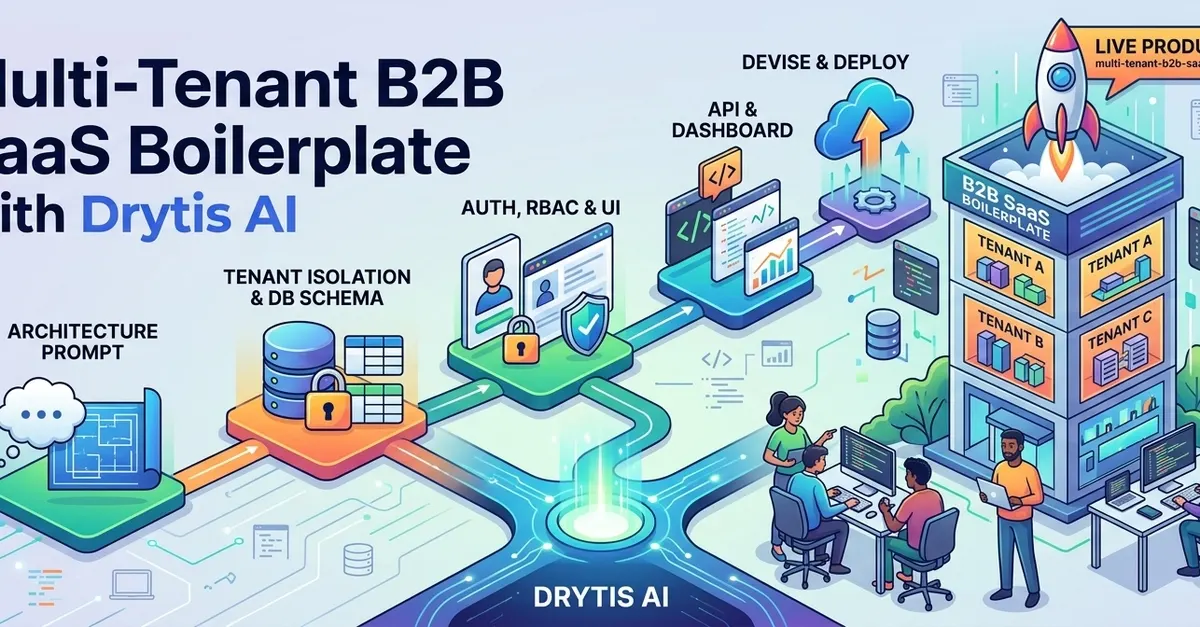
In the traditional software development lifecycle, building a production-ready multi-tenant B2B application is a notorious bottleneck. Developers often spend weeks—if not months—tackling the "plumbing" of an application before they even touch the unique value proposition of their product. This plumbing includes configuring database-isolated schemas, architecting complex authentication flows, building tenant management dashboards, implementing role-based access control (RBAC), and integrating billing hooks.
For entrepreneurs and developers looking to monetize their skills, this high barrier to entry can be discouraging. However, the rise of AI Development tools has fundamentally shifted the math. By leveraging AI-driven development environments, you can now move from an initial concept to a fully deployed, multi-tenant SaaS product in a fraction of the time. This guide explores the technical execution of building a high-quality boilerplate using modern frameworks and Automation.
Why Multi-Tenant SaaS is a Goldmine for Developers
The multi-tenant model is the backbone of the modern software economy. Unlike single-tenant applications where each customer has their own isolated instance, a multi-tenant architecture allows multiple customers (tenants) to share a single instance of the software while their data remains strictly isolated. This model is highly scalable and cost-effective, making it the preferred choice for B2B software providers.
By mastering the creation of a multi-tenant boilerplate, you open several revenue streams:
- Selling the Boilerplate: You can package your code and sell it on platforms like Gumroad or
- Freelance Development: Offer rapid prototyping services on Upwork or Fiverr, promising clients a functional MVP in days rather than months.
- Micro-SaaS Ownership: Use the boilerplate to launch your own niche software products quickly, testing markets without heavy upfront development costs.
The Technical Blueprint: A Step-by-Step Execution
To build a professional-grade boilerplate, you need a robust foundation. For this workflow, we utilize Laravel, a powerful PHP framework that is industry-standard for rapid web application development, combined with AI-assisted coding tools to handle the repetitive heavy lifting.
1. Environment Scaffolding and UI Foundation
The first step is initializing a clean environment. Using Laravel 11, you set up your core environment variables, including database credentials and application keys. To ensure a modern user experience, the UI should be scaffolded using tools like Laravel Breeze, which integrates Blade and Alpine.js, and styled with Tailwind CSS. Using Vite for asset bundling ensures that your frontend remains fast and responsive.
2. Architectural Specification and Schema Design
Before writing logic, you must define the data architecture. This is where AI Development shines. You can prompt an AI to generate a comprehensive architectural spec and schema definitions. For a multi-tenant system, your database migrations must include specific tables such as:
- Tenants: To store company-level information.
- Users: Must include a
tenant_idto ensure every user is tied to a specific organization. - Subscription Levels: To manage tiers like Free, Starter, Pro, and Enterprise.
- Activity Logs: Crucial for B2B audit trails.
3. Implementing Tenant Isolation: The Golden Rule
The most critical aspect of a multi-tenant app is data security. You must ensure that User A from Company A can never see the data of User B from Company B. The most efficient way to handle this in Laravel is through a "Tenant Isolation Trait."
By creating a BelongsToTenant trait, you can implement a global query scope. This automatically injects a filter into every database query, ensuring it only retrieves records matching the current user's tenant_id. This level of Automation prevents accidental data leaks, which is the number one risk in B2B software.
4. Provisioning and Role-Based Access Control (RBAC)
When a new company signs up, your system must "provision" them. This involves a TenantProvisioningService that handles the creation of the tenant, the creation of the owner account, and the assignment of a default subscription tier within a single atomic database transaction. This ensures that if any part of the signup fails, the database isn't left in a corrupted, half-finished state.
Once the tenant is created, you must manage permissions. Implementing middleware like RequireRole allows you to restrict features based on the user's position (e.g., Owner, Admin, or Member). This allows you to sell higher-priced tiers that include advanced administrative features.
Testing and Infrastructure Audit
A boilerplate is useless if it isn't reliable. A professional developer must implement a rigorous test suite. You should use automated testing to cover:
- Tenant Scope Isolation: Verifying that one tenant cannot access another's data.
- Role Permissions: Ensuring a "Member" cannot perform "Admin" actions.
- Onboarding Flows: Testing the end-to-end journey from registration to dashboard access.
By running these tests through a continuous integration pipeline, you ensure that future updates to your SaaS don't break the core isolation logic.
Monetization Strategies for Your AI-Powered Boilerplate
Once you have mastered this workflow, you are no longer just a coder; you are a provider of high-value digital assets. Here is how to turn this technical skill into a scalable business:
The "Build-and-Sell" Model
Many developers find success by creating highly specialized boilerplates. For example, instead of a general B2B boilerplate, you could build a "Healthcare-Compliant SaaS Boilerplate" or a "Fintech-Ready Laravel Starter." Because these niches require specific security and compliance features, you can charge a premium—often ranging from $200 to $1,000 per license on platforms like Gumroad.
The Agency Model
Use your ability to build rapid MVPs to land high-ticket clients on Upwork. Instead of bidding on small tasks, bid on "Product Development" projects. You can tell a potential client, "I can deliver a functional, multi-tenant MVP with billing and user management in three weeks." This speed is your competitive advantage, allowing you to charge professional rates while working significantly fewer hours than traditional agencies.
Conclusion
The intersection of AI Development and traditional frameworks like Laravel has created a massive opportunity for developers to move faster than ever before. By automating the tedious aspects of SaaS development—such as tenant isolation, provisioning, and RBAC—you can focus on building the features that actually make money. Whether you are building your own empire or providing services to others, mastering the multi-tenant boilerplate is one of the most profitable technical skills you can acquire in the current market.