Make Money with Client-Side AI Utility Tool Platforms
The Forgotten Side Project Folder That Became a Lucrative Passive Income Stream
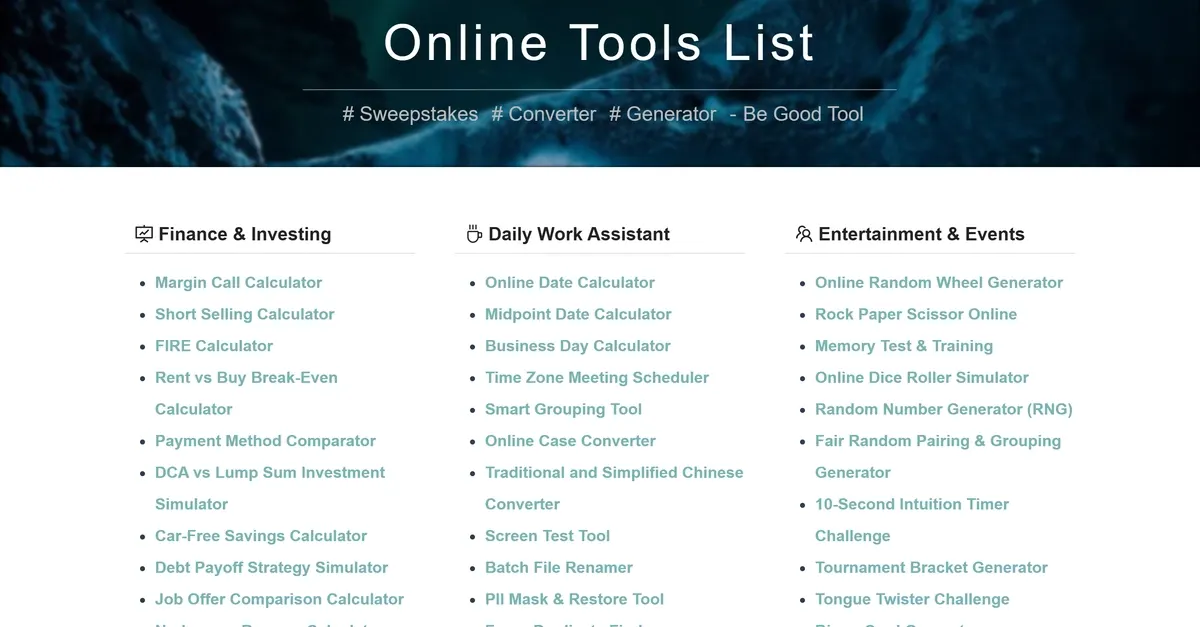
Every developer has that folder on their laptop: the one filled with half-finished side projects, ambitious ideas that fizzled out after a single weekend of coding. Four years ago, BeGoodTool was just another entry in that graveyard of good intentions. It didn’t start with a venture capital pitch, a 30-page business plan, or a goal to disrupt the SaaS market. It started with sheer frustration.
I was working on a routine development task and needed to quickly format a massive JSON payload and convert a batch of image files. I searched for an online tool, and immediately ran into every annoyance that plagues modern web utilities: forced account sign-ups, core features locked behind surprise paywalls, and the worst offender of all: being required to upload private, sensitive files to an unknown server just to run a simple processing task. As a frontend developer, I thought to myself: Browsers are powerful computation engines now. Why am I sending my files to a stranger’s server to process when I can build a clean, client-side version that runs entirely on my own machine?
That weekend, I built a simple JSON formatter that ran 100% in the browser, no uploads required. Then I built a lightweight image converter. When a few colleagues asked for a custom date calculator for project planning, I added that too. What started as a solution to my own annoyance snowballed into a full platform hosting more than 70 diverse utilities, supporting 18 languages, and generating a consistent, substantial passive income stream with almost no ongoing maintenance work.
Why Zero Backend Processing Is the Ultimate Hack for Solo Indie Hackers
When most developers think about scaling a web app for global traffic, they immediately jump to complex infrastructure diagrams: Docker containers, Kubernetes clusters, auto-scaling Node.js servers, load balancers, Redis caches. For a solo indie hacker working on side projects in the evenings, that is a recipe for burnout. I had no interest in patching server vulnerabilities at 10PM, no desire to wake up in a cold sweat if a tool went viral and crashed my database, and definitely no interest in paying a four-figure AWS bill because of unexpected traffic spikes.
So I set one non-negotiable architectural rule for the entire platform: zero backend processing. Every single tool on the site—whether it’s generating a compressed ZIP file, parsing a 50MB CSV, or running optical character recognition on an image—executes entirely inside the user’s browser using their local CPU and RAM. No data ever leaves their device.
This decision gave me two unfair advantages that made the platform nearly impossible to fail at:
- Absolute privacy and zero compliance overhead: I don’t have to build GDPR infrastructure, maintain secure database compliance, or run data-wiping cron jobs, because I physically cannot see or store user data. That eliminated thousands of dollars in legal and maintenance costs before I even launched.
- Infinite free scale: Since no server re
The $0-a-Month Tech Stack That Powers 70+ Global Tools
Building a platform this robust doesn’t require expensive infrastructure or a team of engineers. The entire stack is built on frontend development tools and free static hosting, perfect for solo indie hackers with limited budgets.
Core Hosting and Frontend Foundation
Since there’s no backend, the entire platform is a static site that can be hosted for free on platforms like Vercel, Netlify, or Cloudflare Pages. These platforms handle global CDN distribution, SSL certificates, and automatic deployments for free, so your tools load in under 200ms for users anywhere in the world. I use a lightweight frontend stack with no heavy server-side rendering required to keep initial page loads fast, and lazy-load individual tool pages so users only download the code for the tool they’re actually using.
Heavy Lifting with WebAssembly
For tools that require intensive computation—like OCR, large CSV parsing, or image analysis—I use WebAssembly to run near-native performance directly in the browser. WebAssembly lets you compile code written in languages like Rust or C++ to run in the browser at speeds close to native desktop apps, so even processing 100MB files feels seamless to the user, no server required. This is the secret to building tools that feel as powerful as desktop software, but run entirely in a web browser.
Monetization Without Backend Complexity
Even though there’s no backend, you can still run a full SaaS-style business model. I use Stripe for payment processing and Gumroad to sell one-time and subscription pro licenses for advanced features. License key validation runs entirely client-side, so there’s no need for a backend database to check user subscriptions. Pro features include batch processing, ad-free access, advanced export options, and priority support, priced between $5 and $15 per month.
Turning Utility Tools Into Long-Term Passive Income
The biggest benefit of this client-side model is how little ongoing work it requires once the platform is launched. There’s no server maintenance, no database backups, no security patches for backend code. The only maintenance needed is occasional updates to tools to fix browser compatibility issues or add small requested features, which takes a few hours a month at most.
To scale your income as an indie hacker, start small: don’t try to build 70 tools on day one. Identify 1-2 high-demand pain points that solve a specific problem for a targeted audience. For example, if you target e-commerce store owners, build a bulk image resizer and a product description generator. If you target developers, build a JSON validator and a JWT decoder. Validate that people will use and pay for the tool before expanding your catalog.
Common Mistakes to Avoid When Building Your Utility Platform
Even with a simple architecture, there are a few pitfalls that can sink your platform before it gains traction:
- Overbuilding at launch: Don’t waste months building 20 tools before you validate demand. Launch a single high-quality tool first, drive traffic to it
- Adding unnecessary backend features: It’s tempting to add user accounts, saved file history, or shared tool links, but every backend feature adds maintenance work, compliance overhead, and cost. Stick to client-side only as long as possible, and only add backend features if they directly drive revenue.
- Ignoring performance: Even though processing is client-side, slow tools will drive users away. Use WebAssembly for heavy computation, optimize asset sizes, and lazy-load tool code to keep load times fast. Test your tools on low-end devices to make sure they run smoothly for all users.
- Skipping SEO: Since your platform is static, it’s already optimized for search engines. Make sure each tool has its own dedicated page with proper meta tags, descriptive content, and relevant keywords, so users can find your tools
The Indie Hacking Playbook for Low-Effort, High-Reward SaaS
Building a client-side utility platform is one of the most accessible ways for solo developers to build a profitable SaaS business without upfront funding, a team, or complex infrastructure. You don’t need to learn backend development, manage servers, or deal with compliance headaches. All you need is strong frontend development skills, an understanding of user pain points, and a willingness to ship small, useful tools quickly.
Four years after launching that first JSON formatter, I still work on the platform for only a few hours a month. The passive income it generates covers my rent, and I’m free to work on other side projects or take time off without worrying about the business stopping. It’s the perfect example of how indie hacking, when focused on solving real user problems with simple, elegant architecture, can deliver far more value than overcomplicated, venture-backed SaaS products that require millions in funding to run.
If you have a folder of abandoned side projects on your laptop, dig through it. Find that small, useful tool you built to solve your own problem, polish it up, and launch it. You might just build the next passive income stream that changes your life, no backend required.