Make Money Creating AI-Generated 3D Game Worlds
Building On-Demand AI Game Worlds: A Practical Guide to Cheap, Custom 3D Experiences
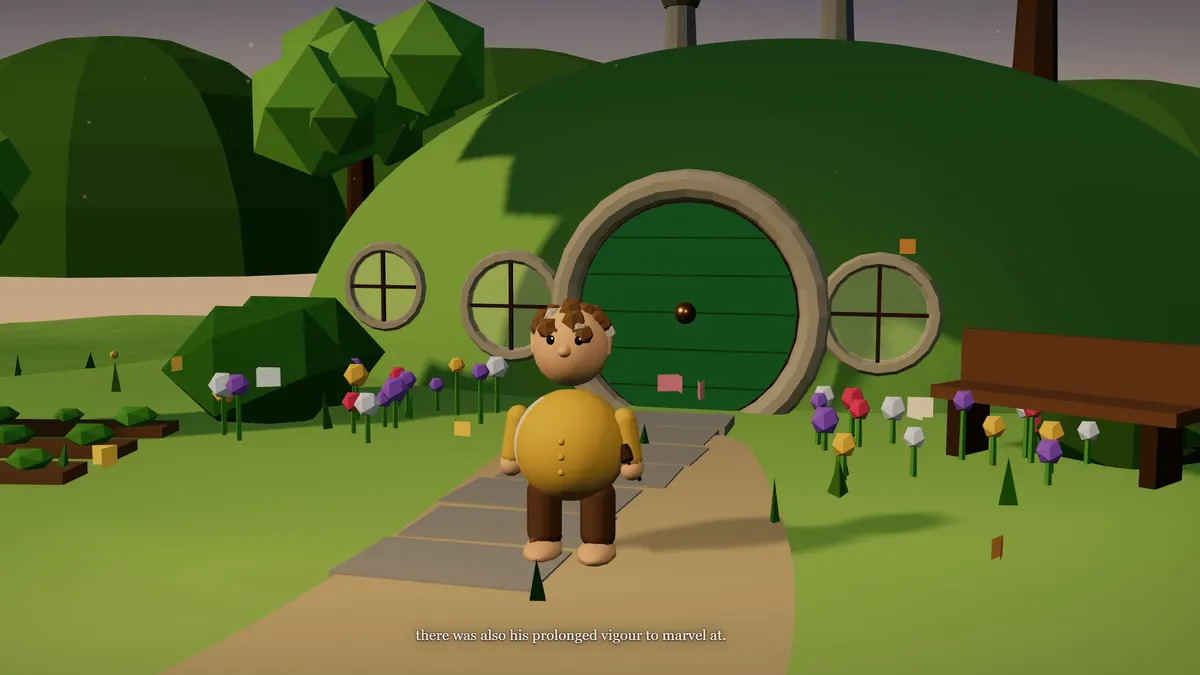
Imagine typing a single paragraph describing a fantasy tavern, and within minutes, you have a fully navigable 3D game world rendered in the browser. This isn't science fiction anymore. Recent breakthroughs in Generative AI are making on-demand AI Gaming environments a reality, and the cost is surprisingly low.
The Power of Text-to-3D Generation
In a recent experiment, AI researcher Andrej Karpathy demonstrated how a single paragraph from "The Lord of the Rings" was transformed into a complete 3D browser scene using Claude Opus 5. The model generated 5,500 lines of code in about two hours, all for roughly $10 in compute costs. The result? A playable Three.js scene where objects were automatically placed and animated.
This showcases the potential of 3D Generation tools powered by large language models. What once required teams of developers and artists can now be prototyped quickly using AI, opening new possibilities for indie developers and creators who want to build Interactive Media experiences without massive budgets.
How It Works: From Prompt to Playable Scene
The process is surprisingly straightforward:
- Write a descriptive prompt – Whether it's a fantasy castle, a sci-fi corridor, or a medieval marketplace, your text sets the scene.
- Feed it to a multimodal AI model – Models like Claude Opus 5, GPT-4o, or specialized Generative AI engines interpret the text and generate code.
- Output in Three.js – The model produces browser-ready JavaScript using Three.js, a popular library for rendering 3D graphics in web environments.
- Refine and deploy – While the initial output may have quirks, it serves as a strong foundation that can be cleaned up and published.
The entire workflow can be completed in under an hour, and the resulting scene runs directly in the browser, making it easy to share and iterate on.
Real-World Applications for Creators
Beyond novelty experiments, this technology has tangible use cases:
Rapid Prototyping for Game Developers
Indie developers can use AI Gaming tools to quickly mock up levels, test layouts, or visualize story beats before investing in polished assets. Instead of spending weeks modeling in Blender or Unity, a developer can generate a basic Three.js environment in minutes.
Interactive Storytelling and Educational Media
Educators and storytellers can create immersive Interactive Media experiences from written narratives. A history lesson about ancient Rome, for instance, could be turned into a virtual tour of the Colosseum with minimal manual effort.
Client Demos and Pitch Decks
Freelancers on platforms like Fiverr and Upwork can offer AI-assisted 3D scene generation as a service. A real estate agent might request a virtual walkthrough of a property that doesn't exist yet, or a startup could pitch a new product using a dynamically generated 3D demo.
Monetizing AI-Generated Game Worlds
If you're looking to turn this into income, here are some practical strategies:
Sell Templates and Scenes
Platforms like Gumroad and itch.io allow creators to sell downloadable 3D scenes, Three.js templates, and AI-generated assets. Even rough prototypes can be refined into sellable products for other developers.
Custom World-Building Services
Offer bespoke AI Gaming environment creation on freelance marketplaces. Clients provide a concept or narrative, and you deliver a browser-based 3D scene. Pricing can range from $50 for simple spaces to $500+ for complex, multi-room environments.
YouTube and Content Creation
Create content showing your AI-to-3D workflow. Tutorials, time-lapse videos, and "prompt-to-playable" showcases perform well on YouTube. Monetize through ads, sponsorships, and affiliate links to tools like Three.js hosting services or AI APIs.
Educational Workshops
Teach others how to use Generative AI for 3D Generation. Host paid workshops on platforms like Teachable or Skillshare, targeting game design students, educators, and hobbyist developers.
Challenges and Limitations
While the potential is huge, there are still hurdles to overcome:
Quality Control
AI models often make mistakes in object placement, lighting, or animation logic. The scene Karpathy generated looked impressive but had noticeable errors. Manual cleanup is still required, which means basic coding knowledge is essential.
Limited Self-Evaluation
Current models can't watch their own rendered output in real time. They rely on static screenshots for feedback, leading to inconsistencies. This limits the complexity of scenes that can be reliably generated in one pass.
Token Costs Add Up
While a single scene might cost $10 to generate, producing dozens of scenes for a project can become expensive. Budgeting for API usage is crucial, especially if you're offering services at scale.
Getting Started: Tools and Platforms You Need
To begin building your own AI-generated game worlds, consider these tools:
- Claude Opus 5 or GPT-4o – For generating Three.js code from text prompts.
- Three.js – The core library for rendering 3D in the browser.
- CodePen or Glitch – Quick platforms to test and share Interactive Media prototypes.
- Fiverr or Upwork – To offer your services or hire help for refinement tasks.
- Gumroad – To sell templates, scenes, and tutorials.
Final Thoughts: The Future of AI-Powered 3D Worlds
The line between imagination and implementation is blurring. With Generative AI handling the heavy lifting of 3D Generation, anyone with a story to tell can create a Three.js world to bring it to life. While today's outputs are more "vibe checks" than perfect simulations, they represent a massive leap forward in accessibility and affordability.
For creators, developers, and entrepreneurs, the time to experiment with AI Gaming and Interactive Media is now. Whether you're building a portfolio, launching a side hustle, or just exploring creative possibilities, the tools are cheaper, faster, and more powerful than ever.
Start small, iterate often, and don't be afraid to let the AI surprise you. The next big indie hit might not come from a AAA studio—it might start with a single paragraph and a $10 API call.