How to Make Money Selling Low-Cost Humanoid Robot Hardware
The New Frontier of AI Monetization: Profiting from Low-Cost Robotics Hardware
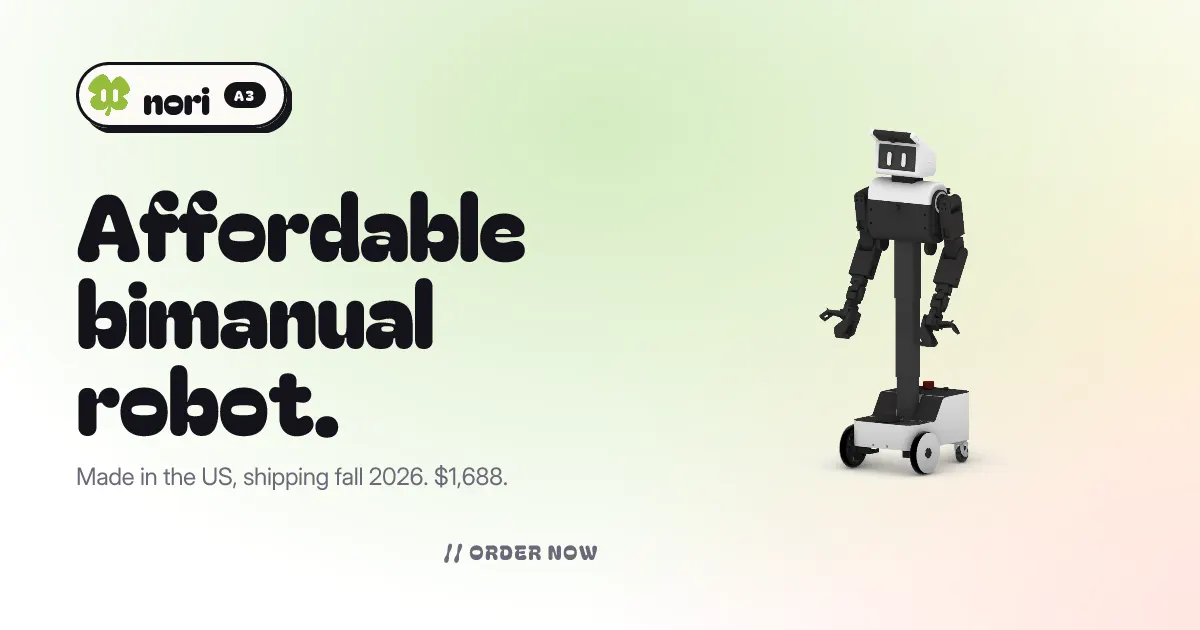
For years, the barrier to entry for high-level AI-research has been the astronomical cost of physical infrastructure. If you wanted to train a machine learning model to interact with the physical world, you needed access to laboratory-grade equipment costing tens of thousands, if not hundreds of thousands, of dollars. This scarcity created a bottleneck: researchers could only run small-scale experiments on a handful of machines, making it impossible to collect the massive datasets required for modern foundation models.
The Problem: The Data Bottleneck in Robotics
The current problem is that most existing hardware is too expensive to deploy in large numbers. If a research lab has only one $50,000 robot, they can only collect data at the speed of that one machine. If they could instead deploy fifty $1,500 robots, the data collection rate increases fiftyfold. This makes affordable hardware not just a product, but a critical utility for the entire AI industry.
Identifying the Profitable Hardware Niche
You do not need to build a full-scale, bipedal humanoid that walks like a person to make money in this space. In fact, the most successful entry point for a hardware startup is often a "mobile manipulator"—a robot with a wheeled base and two arms. This design reduces mechanical complexity and cost while maintaining the core functionality needed for most AI tasks.
To build a competitive product in the sub-$2,000 range, you must focus on several key engineering trade-offs:
- Locomotion: Use a differential wheeled base instead of complex legs. Wheels are cheaper, more stable, and easier to program for SLAM (Simultaneous Localization and Mapping).
- Actuation: Instead of expensive Quasi-Direct Drive (QDD) motors, utilize high-ratio servos. This significantly lowers the bill of materials (BOM) while still providing enough torque for basic tasks.
- Compute: Use accessible single-board computers like the Raspberry Pi 5 for onboard safety and basic navigation, while offloading heavy AI inference (like Vision-Language-Action models) to a remote server or a local workstation
- Sensors: Incorporate essential but affordable components such as 2D Lidar, RGB cameras, and microphone arrays to allow the AI to "see" and "hear" its environment.
Monetization Strategies: Beyond the Initial Sale
Selling a piece of hardware for a price like $1,688 provides immediate revenue, but the real long-term wealth in the robotics sector comes from the ecosystem built around the device. If you are looking to scale this into a serious business, consider these three revenue streams:
1. The Hardware Margin
The primary goal is to achieve a healthy margin by optimizing the assembly process. By designing parts that are easy to manufacture and even 3D-printable for repairs, you reduce the long-term cost of ownership for the customer and lower your own logistical overhead.
2. Software-as-a-Service (SaaS) and SDKs
3. Data and Fleet Management
As your fleet of robots grows, the value of the data they collect increases. While privacy is paramount, providing platforms that allow researchers to manage large fleets of robots remotely is a high-value service that can be billed on a subscription basis.
How to Start: From Concept to Market
If you are an engineer or a developer looking to enter this space, you don't need a massive factory in San Francisco to start. You can follow a lean startup methodology:
Step 1: Prototyping and Iteration. Use CAD software to design your robot and 3D print components to test the kinematics. Focus on achieving a specific "payload" capacity—even a small 1.5 kg payload capacity per arm is enough to perform most domestic or laboratory tasks.
Step 2: Software Simulation. Before shipping physical units, build a browser-based simulator. This allows potential customers to test your robot's capabilities in a digital environment, lowering the friction for them to commit to a purchase. You can showcase these simulations on YouTube to build organic interest.
Step 3: Community Building. Use platforms like GitHub to host your SDK. By allowing the developer community to contribute to your code, you essentially gain a free R&D department. A robust, well-documented repository is the best marketing tool for technical hardware.
The Future: Democratizing Physical AI
The ultimate goal of affordable robotics is democratization. We are moving toward a future where anyone, regardless of their formal training, can "teach" a robot a task through demonstration. Once the hardware is cheap enough, the focus shifts from the machine itself to the intelligence driving it. By providing the "body" for the world's most advanced AI "brains," you position yourself at the very center of the next great technological revolution.
If you are looking for more ways to scale a technical venture, these real-world AI monetization case studies provide excellent strategic inspiration.